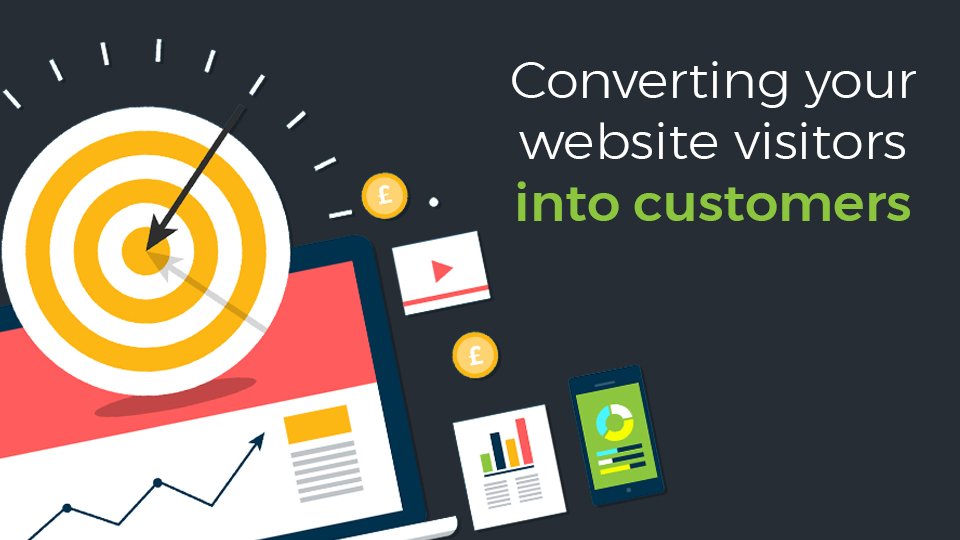
In the digital age, it is crucial for businesses of any size to have a web. Yet, it is not sufficient for a business just to get people to go to the web. The real challenge is getting people to become customers. This is called conversion, and it is a vital factor for a successful web marketing strategy.
Many businesses spend a great deal of effort building traffic for their web, whether it is through search engine optimization, social media, or paid advertising. These tactics can get people to go to a web, but it is not a guarantee of sales or leads. The real objective of a web marketing strategy is to provide a customer with a certain type of experience.
Understanding Website Visitors

Before turning visitors into customers, it is imperative to understand the reasons why visitors visit a web in the first place. Some may be there to gather information, while others may be there to compare products or services before purchasing them.
Visitors to a web may be of the following three kinds:
Informational visitors: These are the people who are seeking information about a particular topic or answering a question in their mind.
Comparative visitors: These visitors are the ones who compare products and services before purchasing them.
Ready to buy visitors: These visitors are the actual customers who are ready to buy a product or service.
By knowing the different kinds of visitors a web may have, a business can create a web that encourages visitors to take the desired action.
Creating a User-Friendly Website

One of the most important factors in converting visitors into customers is the user experience. A well-designed web will make it easier for visitors to find the information they are seeking and perform the actions they want.
Several factors contribute to a user-friendly web:
Clear Navigation
Visitors should easily find the information they are seeking. Simple navigation helps improve the visitor’s experience.
Fast Loading Speed
A slow web may cause visitors to leave the web before they explore the site. Optimizing the images and removing unnecessary elements may help improve the loading speed of the web.
Mobile-Friendly Web Design
Most visitors may visit the web using mobile devices. A responsive web design will help the web display well on all screen sizes.
Clear Call-to-Action (CTA)
The buttons such as “Buy Now,” “Sign Up,” or “Contact Us” will help the visitor move to the next step.
A positive user experience for the visitor will help them stay longer on the web and eventually become customers.
Building Trust with Visitors

- Trust plays a vital role in the purchase decision process on the internet. Visitors are more likely to become buyers if they trust the brand.
- Some of the ways in which trust can be established include:
- Customer reviews
- Secure payment systems
- Professional image
- Contact details
- Refund/return policies
- For instance, including customer reviews helps the potential buyer understand that the product or service has worked for others.
- Trust factors help visitors overcome the uncertainty and take the next step in the purchase process.
Using Content Marketing to Engage Visitors
- Another form of marketing that can help businesses achieve their goal of turning visitors into customers is content marketing. Content marketing is a form of marketing where businesses provide their customers with useful information, thus educating them about their business.
- Some of the best content that can be used to attract visitors to a business web includes:
- Blog posts that address common questions that customers ask
- Product guides
- Case studies
- Videos explaining products or services
- When customers find useful content, they are likely to visit a web again, thus becoming customers. Content marketing is also helpful in improving search engine rankings, thus attracting more visitors to a business web.
Optimizing the Conversion Funnel
- https://s51.upskillrocket.fun/home/Conversion Funnel
- Conversion funnels show how users go through a process from awareness of a site to becoming customers. This process is normally composed of different stages:
- Awareness: At this stage, users become aware of a site, mostly through search engines, ads, or social media.
- Interest: At this stage, users start to explore the site and get information about a product or service.
- Consideration: At this stage, users start to think about whether the product or service is what they need.
- Action: At this stage, users take their final step, such as buying a product or filling out a form.
- Businesses can improve their conversions by recognizing challenges that prevent users from advancing through these stages. For instance, challenges such as a complex checkout process or a lack of information about a product may discourage customers from completing their purchase.
Conclusion
However, it is important to note that a web marketing strategy is not just about bringing more visitors to a business’s online platform but also about encouraging them to take action. In order to convert more visitors into loyal customers, a business must have a powerful combination of a well-designed website, quality content, trust inducers, and data-driven optimization.
By understanding customer behavior and providing a better user experience, a business can design a powerful web that converts more visitors into loyal customers in a competitive online marketplace.
Frequently Asked Questions (FAQs)
1. What does it mean to convert website visitors into customers?
It means turning people who visit your website into paying customers by guiding them to take a specific action—like buying a product, signing up, or contacting you.
2. What is a good website conversion rate?
A good conversion rate typically ranges between 2% to 5%, but it depends on your industry. E-commerce sites may see lower rates, while service-based websites can have higher ones.
3. Why are visitors not converting on my website?
There could be several reasons:
Slow loading speed
Poor website design
Lack of trust signals (reviews, testimonials)
Confusing navigation
Weak or unclear call-to-action (CTA)
How important is website design in conversion?
Very important. A clean, attractive, and easy-to-navigate design builds trust and keeps users engaged, increasing the chances of conversion.